How To Improve Your EPC Rating
Some Practical Steps You Can Take Yourself
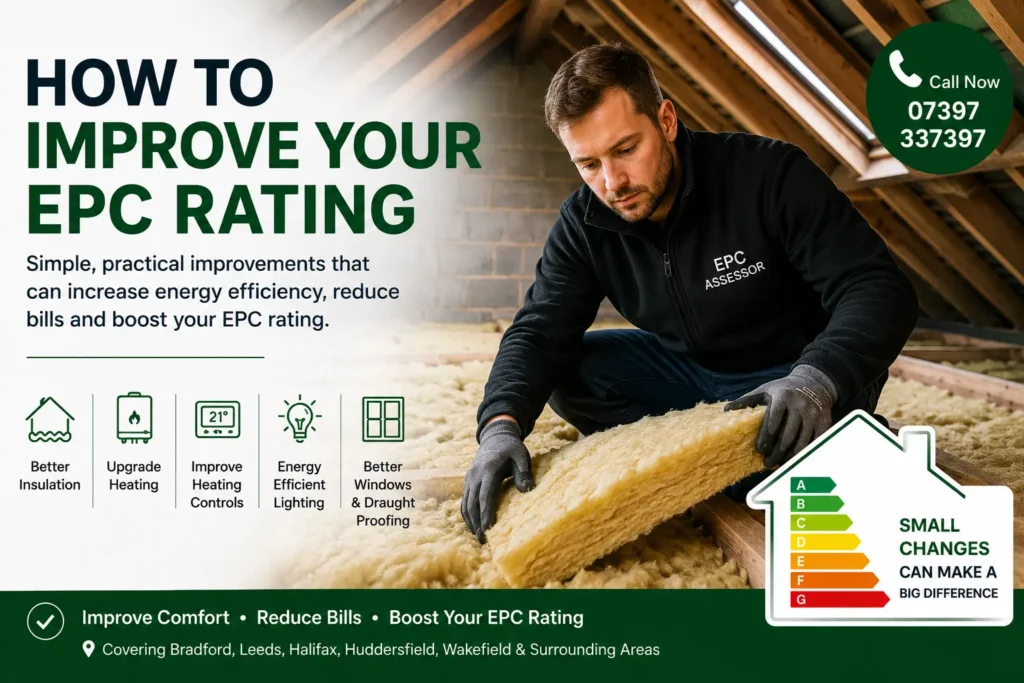
Practical Ways To Improve Energy Performance Ratings
If your property has a low EPC rating, there are several improvements that may help increase energy efficiency and potentially improve the final EPC score.
The most effective improvements usually focus on:
- Reducing heat loss
- Improving heating efficiency
- Lowering estimated energy costs
- Modernising older systems
This guide explains some of the most common measures that can help improve EPC ratings for homes and rental properties.
Looking for a quick summary? Read our EPC Improvement Checklist for practical tips that may help improve your property’s energy performance.
Why EPC Ratings Matter
Energy Performance Certificates measure how energy efficient a property is and estimate typical heating and running costs.
Improving an EPC rating may help:
- Reduce energy bills
- Improve tenant appeal
- Increase comfort levels
- Support rental compliance
- Improve long-term property value
For landlords, EPC ratings are particularly important due to minimum energy efficiency regulations affecting rental properties.
Improve Loft Insulation
One Of The Most Effective EPC Improvements
Loft insulation is often one of the simplest and most cost-effective ways to improve energy efficiency.
Properties with poor loft insulation can lose significant amounts of heat through the roof space.
Increasing insulation thickness may help:
- Improve warmth
- Reduce heating costs
- Improve EPC performance
Many EPC reports recommend improving loft insulation where existing insulation levels are limited.

Checking Loft Insulation Thickness – Wakefield – June 26
Upgrade Heating Systems
Older Boilers Can Reduce EPC Ratings
Heating systems play a major role in EPC calculations.
Older or inefficient boilers often increase estimated running costs and reduce overall efficiency scores.
Upgrading to a modern condensing boiler may improve:
- Heating efficiency
- Hot water performance
- EPC ratings
- Energy consumption
However, heating improvements should always be considered alongside insulation and heating controls for best overall results.
Improve Heating Controls
Small Changes Can Help Efficiency
Heating controls help manage how efficiently heat is distributed throughout the property.
Improvements may include:
- Programmable thermostats
- Room thermostats
- Smart heating controls
- Thermostatic radiator valves (TRVs)
- Modern timer systems
Good heating controls can reduce unnecessary energy usage and positively affect EPC calculations.
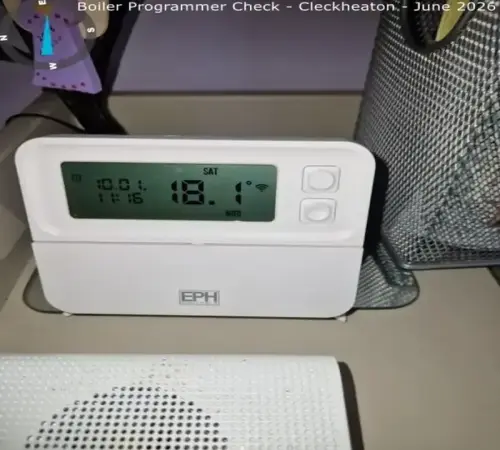
Programmable Thermostat Being Checked – Cleckheaton – June 26
Replace Older Lighting
LED Lighting Improvements
Low energy LED lighting is a simple improvement commonly recommended within EPC reports.
Replacing older bulbs with LED alternatives may:
- Reduce electricity usage
- Improve efficiency
- Contribute positively towards EPC ratings
Although lighting alone will not dramatically increase an EPC score, multiple smaller improvements can collectively help improve the final rating.
Improve Wall Insulation
Reducing Heat Loss Through Walls
Wall insulation can significantly improve thermal efficiency in some properties.
Possible improvements may include:
- Cavity wall insulation
- Internal wall insulation
- External wall insulation
Suitability depends on the property type and construction.
Many older Yorkshire properties use solid wall construction which can be more difficult and expensive to upgrade compared with cavity wall homes.
Upgrade Windows & Glazing
Double Glazing & Heat Retention
Older single-glazed windows can increase heat loss and reduce energy efficiency.
Double glazing may help:
- Improve insulation
- Reduce draughts
- Improve comfort
- Reduce heating demand
However, windows alone do not usually create major EPC improvements unless other areas are also upgraded.
Reduce Draughts & Heat Loss
Small Improvements Can Add Up
Reducing uncontrolled heat loss can improve property efficiency.
Examples may include:
- Sealing draughts
- Improving door seals
- Insulating pipework
- Reducing gaps around openings
These smaller measures can support larger energy improvements across the property.
Electric Heating & EPC Ratings
Why Electric Heating Can Affect Scores
Properties using electric-only heating systems often receive lower EPC ratings due to higher assumed energy costs within EPC calculations.
This is particularly common in:
- Flats
- Apartments
- Smaller rental properties
Older electric heaters and outdated storage heaters may negatively affect ratings more significantly.
Modern high-retention storage heaters may perform better than older systems but can still present EPC challenges compared with efficient gas heating systems.
Solar Panels & Renewable Energy
Renewable Improvements
Renewable technologies may improve EPC ratings in some situations.
Examples include:
- Solar photovoltaic panels
- Solar hot water systems
- Heat pumps
The impact on the EPC depends on:
- Installation quality
- Property suitability
- Overall energy performance
These improvements are usually more expensive and should be considered carefully alongside more practical efficiency upgrades first.

Solar System and Loft Insulation Checked at Same Time – Halifax – June 26
Focus On The Biggest Improvements First
Not Every Upgrade Gives Equal Results
Some improvements have a much larger effect on EPC ratings than others.
In many cases, the most important improvements are:
✔ Insulation
✔ Heating efficiency
✔ Heating controls
✔ Energy Reports Explained, great investment before embarking on any work, before cosmetic or smaller upgrades.
Spending money on expensive works without understanding likely EPC impact can sometimes lead to disappointing results.
Older Properties & EPC Challenges
Traditional Yorkshire Homes
Many older homes across Bradford, Halifax, Huddersfield and surrounding West Yorkshire areas can be more difficult to improve.
Common challenges include:
- Solid stone walls
- Older construction methods
- Conservation restrictions
- Electric heating systems
- Limited insulation opportunities
Improving these properties often requires balancing practicality, cost and property character.
Before Carrying Out Major Work
Understanding Your Current EPC
Before investing in major energy improvements, it is usually sensible to understand:
- Which areas currently affect the EPC rating
- Which improvements may provide the greatest benefit
- Which works may offer limited EPC impact
An EPC assessment or Energy Report can help identify practical improvement priorities for the specific property.
Common EPC Improvement Priorities
Typical EPC improvement recommendations may include:
✔ Increasing loft insulation
✔ Upgrading old boilers
✔ Improving heating controls
✔ Installing LED lighting
✔ Reducing draughts
✔ Improving insulation levels
✔ Reviewing electric heating systems
Need Advice About Improving Your EPC Rating?
We provide EPC assessments and practical guidance for:
- Landlords. our Landlords Guide is free here.
- Homeowners
- Property sellers
- Investors
across:
- Bradford
- Leeds
- Halifax
- Huddersfield
- Wakefield
- Surrounding West Yorkshire areas and we offer free advice.
📞 Call Now: 07397 337397
Related Pages
You may also find these pages helpful:
- Free EPC Advice
- EPC Assessment Process
- Landlord EPC Advice
- Book EPC